
Fundamental Principles in Sports Training and Coaching in Football: The Pons Method
This document presents a series of fundamental principles that guide training and coaching in the sports field, especially in football. Each principle is designed to optimize player performance, foster their comprehensive development and ensure an ethical and sustainable approach to sport. Through the combination of modern techniques, technology and innovative methodologies, the aim is to create a training environment that enhances the individual and collective skills of athletes.
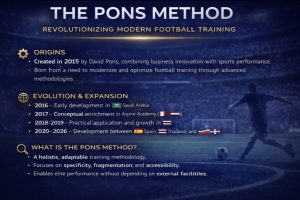
The Pons Method is a comprehensive system that seeks to optimize performance in football through innovative principles that cover tactical, technical, psychological and technological aspects. Below is an analysis of some of the most prominent principles of the Pons Method and its importance in modern training:

1 Principle of Specific Speciality: This principle promotes the specialization of players according to their roles on the field, allowing for detailed customization of training. It focuses on perfecting the specific skills and tactics for each position, which is essential for the development of the player within his tactical role. The coach must adjust every aspect of training to align with the game model, using data analysis to identify key areas for improvement. Although the essence of this principle comes from the awareness of the importance of specificity within the planning of each specialist.
2 Principle of Gamification: This element is key to increasing the motivation and commitment of players. Through game dynamics and simulations, players can interact in a competitive and fun way, which helps reinforce tactical, technical, physical, and psychological concepts. Gamification facilitates learning through the repetition of specific patterns within a game context.
3 Principle of Creating Automated Processes (F.P.M): It consists of implementing technologies such as Big Data analysis, performance sensors, and feedback systems to evaluate player progress. This approach not only improves team productivity, but also allows for detailed analysis of performance in real time, contributing to tactical optimization.

4 Principle of Specific Rehabilitation of the Football Player: Here, the personalization of rehabilitation plans for each player is highlighted, focusing on their physical and psychological needs. Advanced technology is used to evaluate the state of recovery, accelerating their safe return to competition.
5 Principle of Progressive and Empathetic Synchronicity of the Game Model: It seeks to align the actions of the players with the game model in a progressive manner, promoting a deep understanding between the coaching staff and the players. This principle fosters cohesion that allows for improved decision-making in high-pressure situations.ç

6 Principle of Collective Individualisation: Recognises the importance of personalising each player’s training within a collective framework. This means that whilst each player works on their specific needs, they are integrated within the team’s overall tactical scheme, ensuring that individual goals contribute to collective performance.
7 Principle of Dynamic-Complex Adaptability: Drives the ability of players and the team to adapt quickly to changing situations in the game. This principle is key in high-pressure environments where tactics must be adjusted in real-time, integrating elements of applied neuroscience and predictive analysis to optimise decisions.

8 Principle of Effective Game Model Optimization: Refers to maximising the potential of the game model through constant review and adjustment based on empirical data. The use of advanced tactical analysis allows the coaching staff to identify areas that need improvement and adjust tactics to optimise overall team performance.

9 Principle of Applied Specific Neuroscience: This principle uses knowledge about brain function, particularly mirror neurons, to improve decision-making and technical execution on the field. Through observation and simulation, players internalise tactical patterns that they can replicate in game situations.

10 Principle of Dynamic Simulation of Modern Game Patterns: Uses tactical simulations to train players in situations that reflect real game conditions, better preparing them to react and adapt to changes on the pitch.
11 Principle of Continuity and Progression of Fragmented Training: This principle is based on the idea of breaking down training into small, specific units, focusing on specific aspects of the game, but ensuring that there is a constant and fluid progression between them. By maintaining continuity, players are prevented from losing the thread of their development, as each session builds on the previous one. This modular approach facilitates cumulative learning and ensures that tactical concepts are integrated in a solid way.

12 Principle of Psychological Resilience: One of the most important pillars in modern football is the ability of players to overcome adverse situations. This principle focuses on developing mental toughness, tolerance for failure and the ability to handle pressure. This is where emotional intelligence plays a vital role, helping players manage their emotions at critical moments, which in turn improves their performance under pressure.
13 Principle of Sustainability and Sports Ethics: The Pons Method also incorporates a strong commitment to ethics and sustainability, both in team management and in the way it is trained. This principle encourages practices that respect the values of sport, ensuring that success is not achieved at the cost of players’ physical or emotional health, or through unethical behaviour.
14 Principle of Sensory and Perceptual Integration: Developing players’ ability to perceive their environment and react quickly is essential in top-level football. This principle seeks to optimise sensory responses, improving split-second decision-making. Through specific training that simulates real-life game pressure, players’ spatial and sensory perception is fine-tuned.
15 Principle of Biofeedback Technology and Emotional Regulation (BTR): The use of advanced technology to monitor players’ physiological responses during training is a key component of this principle. Tools such as heart rate sensors, stress analysis and real-time feedback systems allow the coaching staff to adjust training to improve both physical performance and emotional stability.
16 Principle of Sustainable Collective Individualisation Training (SIT): Here, personalisation of training is taken to another level, ensuring that each player receives a work plan tailored to their physical, technical and psychological needs. However, what is crucial is that this plan is sustainable in the long term, avoiding overloads or training that can lead to injury or burnout.

17 Principle of Specific Synergy of the Technical Staff: This principle highlights the importance of effective collaboration between all members of the coaching staff, from physical trainers to data analysts. Synergy between the staff is essential to ensure that everyone is working towards the same goals, resulting in a more cohesive and efficient team. This includes constant communication and feedback between different areas of the team.
18 Interactive Tactical Simulation (ITS) Principle: Using technology such as interactive boards and virtual simulations, this principle allows players to train in complex tactical situations before matches. This gamified preparation increases tactical agility and the ability of players to quickly adapt to changes in the game.
19 Dynamic-Specific and Progressive Precision Principle of Gamified Training: Here, gamification is combined with precision and progression of training, focusing on players improving in specific tasks through gamified exercises. These exercises are designed to be progressive, increasing in difficulty as players progress in their development.
20 Synchronized Optimization of Off-Ball Play (SOBG) Principle: Often, the tactical focus is on what happens with the ball, but this principle puts emphasis on off-ball play, optimizing the movements and decisions players make to best position themselves. This aspect is crucial to creating teams that move in perfect harmony, both in defense and attack.
21 Principle of Tactical Prediction Based on Artificial Intelligence (AI): Using Artificial Intelligence to analyze large volumes of data allows predicting game patterns and opponent movements. This principle provides a significant tactical advantage, as it allows coaches to make informed decisions and adjust strategy in real time based on predictive models.
22 Principle of Leadership Development and Psychosocial Cohesion: Focused on the development of leaders within the team, this principle fosters cohesion and leadership both on and off the field. It encourages players to take on leadership roles, thus strengthening the group dynamics and its collective performance.
23 Principle of Systemic and Progressive Improvement through Drill Programming (MIC): This principle focuses on the importance of continuous and progressive improvement through well-structured drill programming. The basis is to establish a sequence of training sessions that follow a progressive logic, adjusting to the technical, tactical and physical development needs of the players over time. The key is consistency and the progressive increase in the difficulty of the exercises, to prevent players from falling into monotony and ensure their evolution.
24 Principle of Dynamic-Specific and Progressive Precision of Gamified Training: This principle integrates precision and progression into training through gamification, ensuring that exercises focus on specific tactical and technical aspects of the player, but in an interactive and motivating way. Players work precisely on tasks that mimic real game situations, gradually increasing complexity as they progress.
25 Synchronized Optimization of Off-Ball Play (SOBOP) Principle: This principle places emphasis on off-ball play, which is often underestimated. It is about optimizing player movement, transitions, and positioning when not in possession. This is critical to structuring a team that moves in a coordinated manner and maximizes its collective performance, both in defense and attack.
26 Artificial Intelligence (AI)-Based Tactical Prediction Principle: In an increasingly digital world, this principle focuses on using AI-powered predictive models to anticipate patterns of play, opponent movements, and possible outcomes. Big data analytics and machine learning allow coaches and tactical analysts to gain deep insight into opponent weaknesses and proactively adjust strategy.

27 Psychosocial Cohesion and Leadership Development Principle: This principle fosters the development of leadership skills and social cohesion within the team. It is not only about developing technically competent players, but also about promoting leadership that can inspire and unite the group, creating a collective working environment where all members, including non-regular ones, feel valued and motivated.
28 Personalised Metabolic and Nutritional Optimisation Principle (OMNP): The focus on personalising nutritional and metabolic programmes is key to ensuring that each player is physically at their best. This principle ensures that each athlete has a nutrition plan and physical training regimen tailored to their metabolic needs, helping to maximise performance and prevent injuries. Nutrition, together with personalised physical training, is fundamental to keeping players in top condition throughout the season.
29 Mental Chip Change Training Principle: Modern football demands a strong and adaptable mindset. This principle introduces mental training techniques that help players to instantly change their approach when situations require it. It is especially useful in high-pressure moments, such as the end of matches, where players need to make a “chip switch” to maintain concentration and make effective decisions.
30 Principle of Holistic Body-Mind-Technology Synchronization: This principle advocates for a complete integration between the body, mind and the use of technology in the training process. The key is that both the physical and mental aspects of the players are aligned and enhanced by technologies such as data analysis, feedback devices and virtual simulations. This holistic approach ensures that players develop holistically, maximizing their physical and mental performance.

31 Principle of Personalized Attention and Empathetic Communication: This principle places a strong emphasis on empathetic communication and individualized attention within the training process. Coaches must be in constant contact with players, creating an environment where trust and mutual understanding are fostered. This not only improves team morale, but also ensures that each player feels valued and supported in their development.
32. Principle of Building Individual Tactical Strengths
• Sub-principle of Personalization of Tactical Training: Identify individual strengths and design exercises that enhance them, aligning them with the needs of the team.
• Sub-principle of Application in Real Situations: Practice individual tactical strengths in match contexts to consolidate effectiveness.
33. Principle of Synergistic Integration of Dynamic Change
• Sub-principle of Collective Fluidity in Transition: Ensure that the team is able to change pace and adjust strategy in offensive and defensive transition situations.
• Sub-principle of Flexibility in the Use of Resources: When incorporating ball and multi-player exercises, each member of the staff must prioritize the specificity of football aligned with the game model defined by the head coach, ensuring that resources are used optimally and specifically.
These principles and sub-principles allow for a detailed and specific structure that facilitates the effective implementation of the Pons Method, aligning each aspect of training with the collective objectives of the team and ensuring an integrated approach to high performance in football.
34. Principio de Sincronización Holística y Fluidez Adaptativa (SHFA)
Definición: El «Principio de Sincronización Holística y Fluidez Adaptativa» se centra en la integración completa del cuerpo, la mente y la respiración, buscando un estado óptimo de desempeño donde la fluidez, la precisión y la adaptación se alinean de manera natural y espontánea. Este principio abarca la capacidad de mantener la calma mental, responder con precisión a estímulos imprevistos, y adaptarse a la dinámica del juego con un enfoque consciente, empleando técnicas de respiración y regulación emocional para maximizar el rendimiento.
Subprincipios del Principio de Sincronización Holística y Fluidez Adaptativa:
• Subprincipio de Respiración y Regulación Emocional (RRE)
• Definición: Enfocado en el uso consciente de la respiración para regular las emociones durante el entrenamiento y la competición. Este subprincipio fomenta el uso de técnicas de respiración profunda (por ejemplo, respiración diafragmática) para reducir la ansiedad, mantener la calma y asegurar un nivel óptimo de activación física.
• Aplicación: Durante situaciones de alta presión, como la ejecución de un penalti o la defensa en una situación de inferioridad numérica, los jugadores utilizarán la respiración consciente para evitar que las emociones interfieran con su desempeño técnico y táctico.
• Subprincipio de Adaptación Fluida (AF)
• Definición: Este subprincipio subraya la importancia de la adaptabilidad en tiempo real. Los jugadores deben ser capaces de modificar sus decisiones tácticas, su posicionamiento y su rol en el equipo según las necesidades cambiantes del juego, manteniendo siempre una actitud calmada y enfocada.
• Aplicación: El entrenamiento incluirá ejercicios que simulan escenarios dinámicos e impredecibles, con el objetivo de que los jugadores se adapten a cambios repentinos (por ejemplo, un cambio de esquema o transición rápida). La adaptación fluida implica actuar sin pensamiento consciente o indecisión, similar al concepto de mushin.
• Subprincipio de Integración de Fluidez y Precisión (IFP)
• Definición: En este subprincipio se busca que la acción técnica y táctica sea realizada con una precisión casi automática, integrando la repetición sistemática con la atención plena para optimizar la eficiencia de cada movimiento. La fluidez se logra cuando el jugador actúa sin fricción interna, respondiendo con exactitud sin esfuerzo consciente.
• Aplicación: Durante los entrenamientos, se gamificarán ejercicios de toma de decisiones rápida en situaciones de alta velocidad, exigiendo precisión tanto en los pases como en los movimientos, a la vez que se cultiva una mentalidad libre de distracciones mediante prácticas de atención plena.
• Subprincipio de Sincronización Mente-Cuerpo-Técnica (SMCT)
• Definición: Inspirado en el concepto Zen de la unión entre mente y cuerpo, este subprincipio se enfoca en la sincronización entre la percepción, la acción física y la técnica aplicada. Aquí, la práctica de la meditación activa y la repetición de movimientos entrenan al jugador para lograr la unidad mente-cuerpo en cada situación del juego.
• Aplicación: Incluye la práctica de meditación en movimiento, donde los jugadores realizan técnicas repetitivas (pases, regates) mientras mantienen su mente enfocada en cada movimiento, fortaleciendo la conexión entre sus decisiones y la ejecución técnica sin que el sin que el pensamiento consciente interfiera.
• Subprincipio de Visualización Positiva y Estado de Flujo (VPEF).
• Definición: Utiliza la visualización para preparar al jugador para situaciones complejas, con el objetivo de alcanzar el estado de flujo durante el partido. Este subprincipio fomenta la práctica constante de imaginar escenarios y respuestas, generando una reacción automatizada y alineada con el contexto del juego.
• Aplicación: Los jugadores visualizarán situaciones específicas (ataques rivales, transiciones ofensivas) durante las sesiones previas al entrenamiento para anticipar las acciones y promover la capacidad de actuar sin pausa en el momento del partido, incrementando su fluidez y confianza.
Argumentación del Principio en el Método Pons
Este principio se alinea con varios de los principios ya presentes en el Método Pons, tales como la Precisión Dinámica-Específica y Progresiva, Adaptabilidad Dinámica-Compleja, y la Sincronización Holística Cuerpo-Mente-Tecnología. La respiración y la quietud mental aportan un equilibrio necesario para que la mente del jugador funcione de manera eficiente bajo presión, mientras que la precisión y la fluidez en los movimientos tácticos y técnicos se optimizan gracias a la repetición sistemática y el control emocional.
Además, el uso de técnicas de respiración para la regulación del estrés y la práctica meditativa permite que el jugador mantenga un estado de calma y de plena conciencia que maximiza la efectividad de cada movimiento. Esto promueve un enfoque integral que no solo trabaja el aspecto físico y técnico, sino también el mental y emocional, creando una preparación total que diferencia a los jugadores formados bajo el Método Pons.
Este nuevo principio ofrece una herramienta que no solo refuerza la habilidad de actuar con precisión, sino que también permite una integración constante de cuerpo, mente y técnica, impulsando al jugador hacia una experiencia de rendimiento máximo, similar a la lograda por los antiguos guerreros samuráis, donde la acción y la mente se vuelven una.
35. PRINCIPIO de Simplicidad Estratégica
El Método Pons adopta una postura radicalmente diferente: propone que la simplicidad no solo es valiosa, sino esencial para el éxito. No se trata de eliminar la profundidad o el análisis, sino de estructurar el juego y el entrenamiento de manera que las ideas fundamentales se interioricen antes de añadir capas de complejidad. Los jugadores que entienden y ejecutan bien los conceptos básicos son más capaces de adaptarse y tomar decisiones inteligentes bajo presión.
La simplicidad estratégica significa concentrarse en la claridad de objetivos y en el desarrollo de habilidades fundamentales que forman el núcleo de cualquier sistema de juego. Un pase bien ejecutado, un control preciso del balón, una correcta lectura del espacio: estos son los elementos que, combinados de manera efectiva, hacen la diferencia en el campo de juego. La verdadera maestría surge cuando estas acciones simples se integran en un sistema fluido, creando una sinergia que hace que incluso las tácticas más complejas se sientan naturales.
36. El Principio de Repetición Precisa, Sistémica y Efectiva es fundamental dentro del Método Pons porque establece las bases para un desarrollo constante y optimizado de las habilidades tácticas y técnicas del jugador. Este principio se basa en la idea de que la repetición metódica y bien estructurada es clave para la adquisición y el perfeccionamiento de habilidades en el fútbol, garantizando que los jugadores internalicen movimientos y decisiones de manera casi automática en situaciones reales de juego.
Subprincipios del Principio de Repetición Precisa, Sistémica y Efectiva
• Subprincipio de Precisión en la Repetición: Este subprincipio se enfoca en la ejecución técnica precisa de cada movimiento durante los entrenamientos. La calidad de la repetición es tan importante como la cantidad. La precisión técnica asegura que cada jugador no solo repita movimientos, sino que los perfeccione con cada iteración. Esto incluye la revisión constante de la biomecánica, la postura y la toma de decisiones en el campo.
• Subprincipio de Repetición Sistémica: Aquí se enfatiza la planificación estructurada de los entrenamientos. Las repeticiones deben ser parte de un sistema planificado donde cada ejercicio y cada sesión de entrenamiento sigan una progresión lógica. Este enfoque sistémico permite que los jugadores desarrollen habilidades de manera organizada y coherente, maximizando el aprendizaje a largo plazo.
• Subprincipio de Repetición Adaptada al Contexto del Juego: La repetición debe estar alineada con las exigencias específicas del modelo de juego del equipo. Es decir, los ejercicios deben replicar situaciones reales del juego, como transiciones ofensivas o defensivas, jugadas a balón parado, etc. De esta manera, los jugadores no solo repiten movimientos técnicos, sino que lo hacen en un contexto táctico que imita las circunstancias del partido.
• Subprincipio de Evaluación y Feedback Constante: Durante todo el proceso de repetición, es esencial que el jugador reciba una retroalimentación continua sobre su desempeño. Esta evaluación debe ser tanto técnica (cómo ejecuta los movimientos) como táctica (cómo aplica las decisiones en el contexto del juego), permitiendo ajustes precisos que optimicen el aprendizaje.
Argumentación del Principio
Este principio responde a la necesidad de convertir las habilidades individuales en acciones automáticas y eficientes dentro de la dinámica del equipo. La repetición constante, cuando está bien estructurada, lleva a que los jugadores desarrollen una memoria muscular y cognitiva que les permite reaccionar de manera más rápida y efectiva en situaciones de alta presión. Además, este principio asegura que los entrenamientos sean altamente específicos y orientados al modelo de juego del equipo, lo que genera una mayor cohesión entre la preparación y el rendimiento en el campo.
En conclusión, la Repetición Precisa, Sistémica y Efectiva es una herramienta clave para el desarrollo de habilidades en el fútbol, ya que permite que los jugadores internalicen conceptos y acciones a través de la práctica constante y evaluada. Esto conduce a un rendimiento optimizado tanto a nivel individual como colectivo.
Conclusion
The Pons Method is a comprehensive and flexible methodology that fuses traditional football principles with technological, scientific and psychological innovations to maximise the performance of players and teams. Customisation, adaptability and gamification play a central role in its application, ensuring that each player, from their individual specialisation to their integration into the team, can reach their full potential.
The strength of this approach is its ability to adapt to both elite and training teams, by focusing on developing not only technical and tactical skills, but also the mental, emotional and physical aspect of players. This makes the Pons Method a multidimensional system that prepares players and teams for the challenges of modern football, guaranteeing comprehensive training that covers all aspects of the game.
Etiqueta:Coach, Davidpons, Football, Pons method, Sport, Technology, Thailand

También te puede interesar